


Child Protection Network Takes Part in the “Connect to Protect” International Conference in Athens
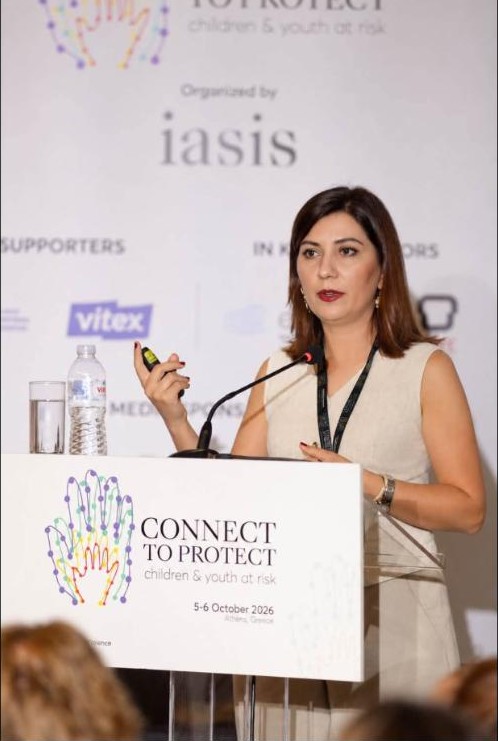
On 5–6 October 2026, Athens, the capital of Greece, hosted “Connect to Protect”, an international conference on child protection and the prevention of violence, organised on the initiative of IASIS.
The conference brought together international child rights experts, representatives of state institutions, researchers, psychologists, social workers and civil society organisations to discuss today’s child protection challenges and effective ways to address them.
A representative of the Child Protection Network (CPN) also took part, learning about international practice, new approaches to child protection and reforms under way in different countries.
Developing child protection systems and early prevention
One of the central themes was making child protection systems more effective by moving from a reactive approach towards early prevention and continuous support.
In particular, the experiences of Iceland and Finland were presented, covering early identification of the needs of children and families, cooperation between services, and child-centred support.
The discussions highlighted that the effectiveness of child protection depends not only on identifying problems, but also on how quickly, accessibly and continuously support reaches the child.
Children’s mental health and trauma-informed approaches
Particular attention was paid to protecting children’s mental health, the consequences of violence and traumatic experiences, and the quality of professional interventions.
Dr Gundo Weiler of the World Health Organization spoke about quality standards for mental health services for children and young people, stressing the importance of listening to children, maintaining their trust and providing the support they need.
Participants also discussed situations in which interventions carried out to protect children can themselves cause additional harm. In this context, they emphasised assessing the consequences of professional decisions, preventing re-traumatisation and consistently applying the principle of the best interests of the child.
Children’s online safety and new risks in the digital environment
Children’s safety in the digital environment was another key topic, given the rapid development of social media, artificial intelligence and new technologies.
Australia’s eSafety Commissioner Julie Inman Grant presented Australia’s experience in protecting children online, stressing that raising awareness among children and parents alone is not enough. Safety must be built into digital platforms and technologies from the very first stage of their design.
The discussion covered online bullying, sexual exploitation, AI-generated fake images and videos, harmful content and the protection of children’s personal data.
The importance of children’s participation in shaping the digital environment was also highlighted, seeing them not only as users of technology but as active contributors to safe solutions.
This topic is especially important for the Child Protection Network, as children’s online safety is one of the Network’s strategic priorities.
Preventing violence and sexual exploitation of children
The conference discussed different forms of violence against children, mechanisms for early detection and prevention, and ways to protect and support the recovery of children who have experienced violence.
Special attention was given to preventing sexual violence against children, child-safe reporting procedures, cooperation between professionals and reducing re-traumatisation within the justice system.
It was stressed that child protection cannot be limited to responding to violence that has already happened. Preventive policies, professional training and joined-up services are essential.
Protecting refugee and migrant children
Experiences of protecting displaced, refugee and unaccompanied children were also presented.
Participants discussed safe accommodation, guardianship, education, psychosocial support and social inclusion.
The experiences shared showed that effective support must be built around each child’s individual needs, interests and hopes for the future.
The importance of involving children in designing their own support plans was highlighted, along with developing their self-confidence, sense of belonging and independent living skills.
Children’s genuine participation in decision-making
One of the conference’s most important messages concerned children’s participation.
International child rights expert Professor Philip Jaffé stressed that listening to children does not by itself guarantee their genuine participation.
Meaningful participation means that adults are ready to reconsider their approaches and decisions on the basis of children’s views.
The discussions underlined that children should be able to take part not only in decisions about their individual support, but also in designing the services and policies intended for them.
From knowledge to practical change
The closing discussion focused on how international standards, research evidence and effective practice from different countries can be turned into real change.
Speakers emphasised that a great deal of knowledge and experience already exists in child protection, but putting it into practice remains one of the main challenges.
They highlighted sustained investment in prevention, cooperation between state and civil society actors, professional capacity building, monitoring and evaluation of policies, and services that respond to the real needs of children and families.
Why international experience matters for the Child Protection Network
The experiences and approaches presented at the conference are important for the Child Protection Network’s strategic priorities, capacity building, monitoring and advocacy work.
In particular, the topics discussed relate directly to preventing sexual violence against children, online safety, tackling child poverty and making the child protection system more effective.
Learning from international experience helps assess the challenges in Armenia, identify possible solutions and strengthen cooperation between state bodies, civil society and other actors working on children’s rights.