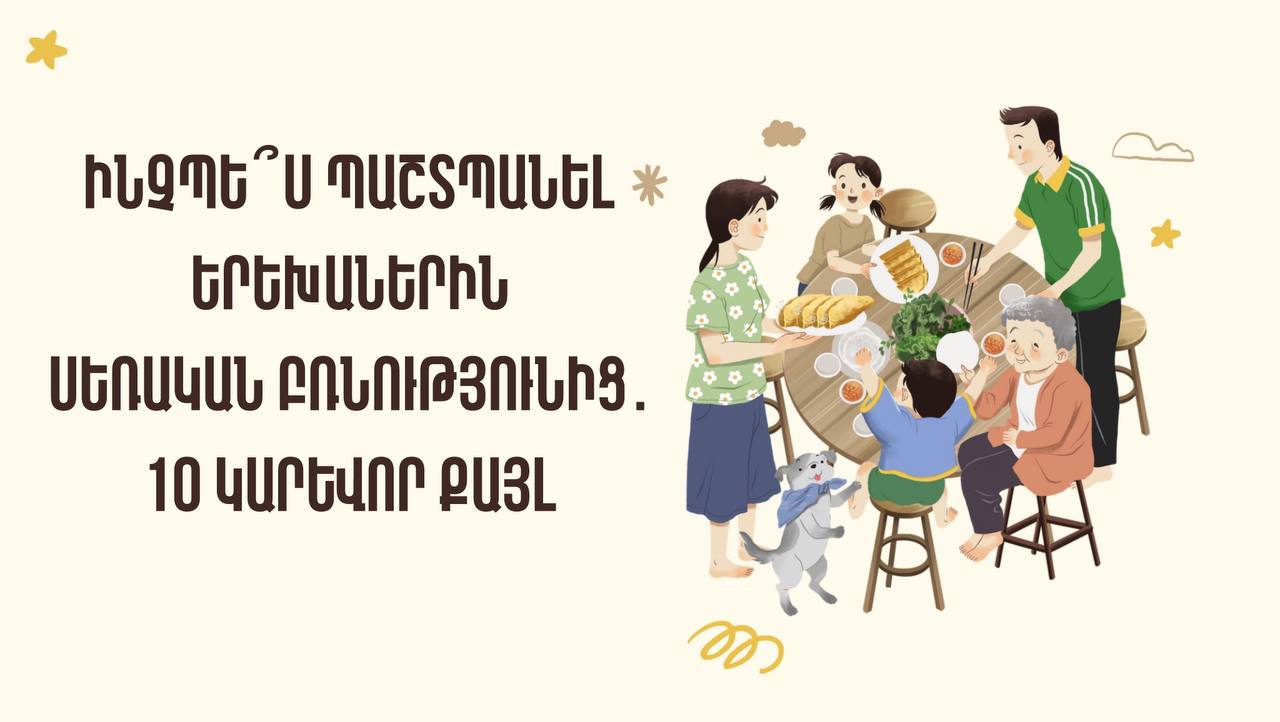


After cases of child sexual abuse become public, we often begin talking about how to protect children from harm that has already occurred. But child protection begins much earlier — at the moment when a parent, teacher, doctor, coach, neighbor, or any adult notices a warning sign and does not ignore it.
No child protection system can work effectively if other members of society remain silent, indifferent, or believe that “it is not their responsibility.” In many cases, abuse is committed not by strangers, but by people the child knows and trusts, and children are not always able to directly explain what has happened to them. That is why it is important not only to love children, but also to notice risks in time, prevent harm, and respond appropriately.
Here are 10 important steps that can help protect children from sexual abuse:
- Teach children that their body belongs to them, and no one has the right to touch them in a way that makes them feel uncomfortable — even if it is someone familiar or trusted.
- Do not force children to hug, kiss, or interact with adults simply out of politeness. Children should feel that their boundaries matter.
- Create an open and safe environment where children can talk about any topic without fear, knowing they will be believed.
- Take behavioral changes seriously — isolation, fears, nightmares, sudden silence, or aggression can all be warning signs.
- Pay attention to adults who try to build a “special relationship” with a child through gifts, secrets, or by isolating the child from others.
- Do not teach children to always obey adults. Children should know they have the right to say “no.”
- Ask not only “How was your day?” but also “Who were you with?” and “What made you happy or upset today?”
- If a child shares something concerning, the first response should be calm listening and believing them — not blaming or doubting them.
- Even the smallest suspicion is enough reason to seek help or report concerns. It is always better to inform professionals about a concern than to remain silent and allow possible abuse to continue.
- Remember: children’s safety is not only a family issue. It is the responsibility of the entire society — parents, schools, coaches, doctors, neighbors, and every adult.
Starting today, let us all become more attentive to the children around us and remember that protecting children is everyone’s responsibility.